Let’s be honest for a second: the moment you sign a lease on a small studio or a tight city flat, an odd panic usually sets in.Decorate a Small Apartment Without Making It Feel CrowdedYou instinctively run out to buy miniature furniture, shove every single piece flat against the drywall, and pray the room somehow feels larger.
Fast forward three weeks, and reality bites. Decorate a Small Apartment Your place doesn’t look like an airy, magazine-worthy home—it feels like an indoor obstacle course where you’re constantly dodging tiny table corners, stepping on tangled charging cables, and squeezing through awkward walkways.
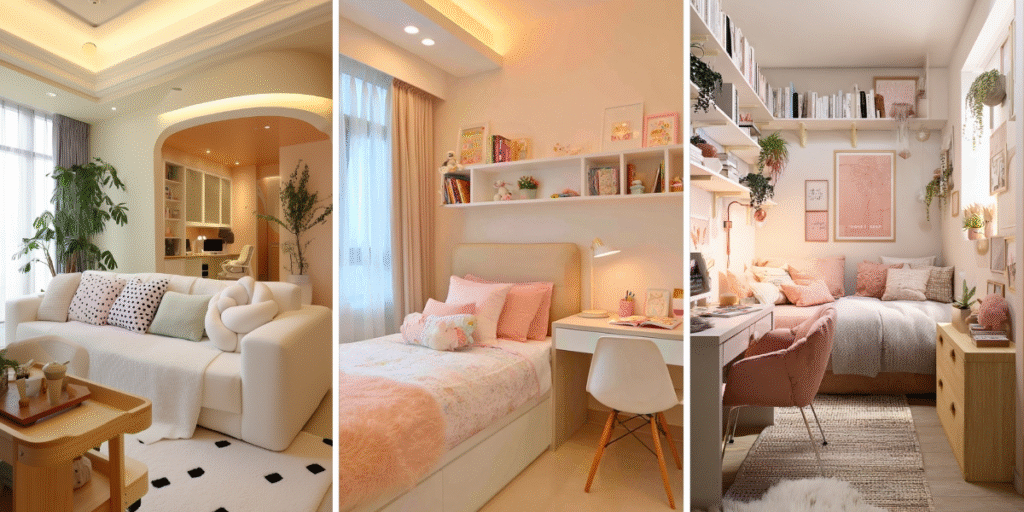
Decorate a Small Apartment Living in a small space doesn’t mean you have to strip away your personality until your home looks like a sterile clinic. It all comes down to managing visual weight. When your eyes can move effortlessly across a room without getting stopped by heavy edges or cluttered floors, even a tiny footprint feels open, calm, and deliberate.
Here is a straightforward, real-world breakdown of how to make a small apartment feel huge without sacrificing an ounce of comfort.
Decorate a Small Apartment Ditch “Micro-Furniture” for Scaled Anchor Pieces
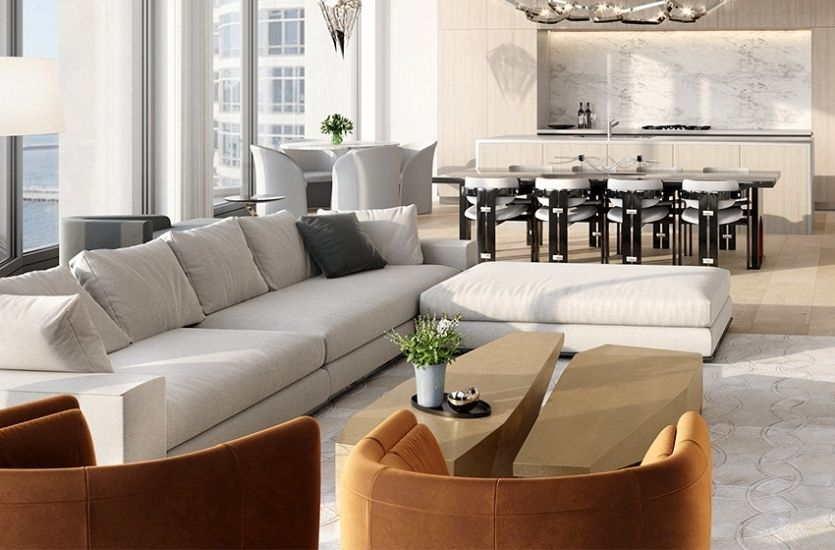
The single biggest trap in small-space design is assuming tiny rooms require miniature furniture.
When you cram a small living room with a petite loveseat, two tiny accent chairs, three miniature side tables, and a small rug, you create massive visual noise. Your eyes jump frantically between ten individual objects, making the space feel choppy, cluttered, and somehow smaller than it actually is.
The Fix: Pick fewer, full-sized anchor pieces. One well-proportioned, comfortable sofa paired with a sleek nesting coffee table creates a grounded focal point that pulls the room together.
Decorate a Small Apartment Elevate Off the Floor (Keep Sightlines Open)
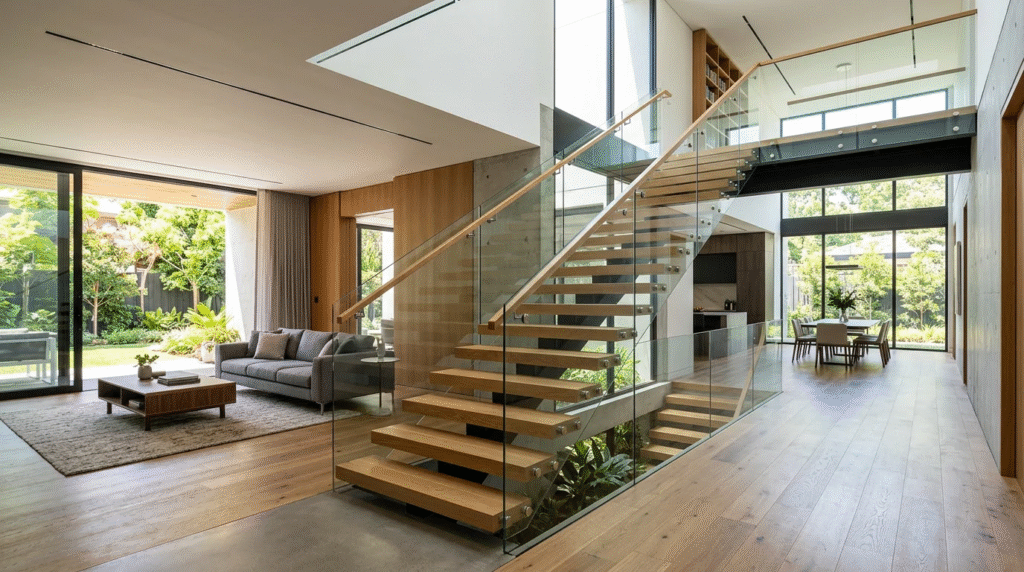
The more continuous floor space your brain can physically see, the larger it perceives the room to be. Heavy furniture sitting flush against the floor acts like a solid wall, cutting off sightlines and trapping light.
- Choose furniture with legs: Look for sofas, sideboards, and armchairs with tapered wooden or metal legs. Exposing just 5 to 7 inches of floor underneath lets air and light pass through, lightening the room’s footprint.
- Embrace glass and acrylic: A glass-top coffee table or clear lucite chair lets light flow straight through, practically blending into the background.
- Wall-mount your storage: Swap bulky nightstands and standing desks for floating shelves or wall-mounted sconces to reclaim valuable floor space.
Decorate a Small Apartment Zone with Rugs and Light—Not Heavy Dividers
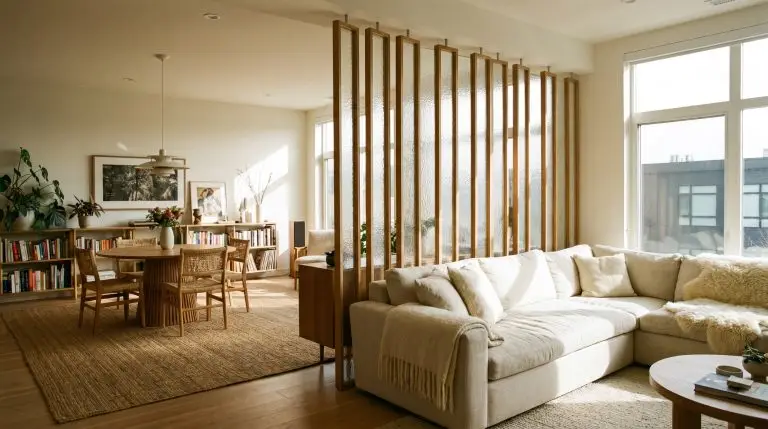
If you live in a studio or open-plan layout, trying to divide your sleeping, dining, and working areas with tall bookcases or folding screens usually backfires. It blocks natural sunlight and cramps your movement.
Instead, use architectural cues to define zones seamlessly:
- Rugs as Foundations: A generous area rug grounds your seating area. Ensuring the front legs of your sofa sit on the rug ties the furniture together into a cohesive “zone.”
- Layered Lighting: Ditch the single overhead light. Place a warm floor lamp by your reading chair, a soft table lamp near the TV, and a low pendant over your eating area. Switching between light sources signals shifts in function without adding physical bulk.
Think Vertically (Draw the Eye Upward)
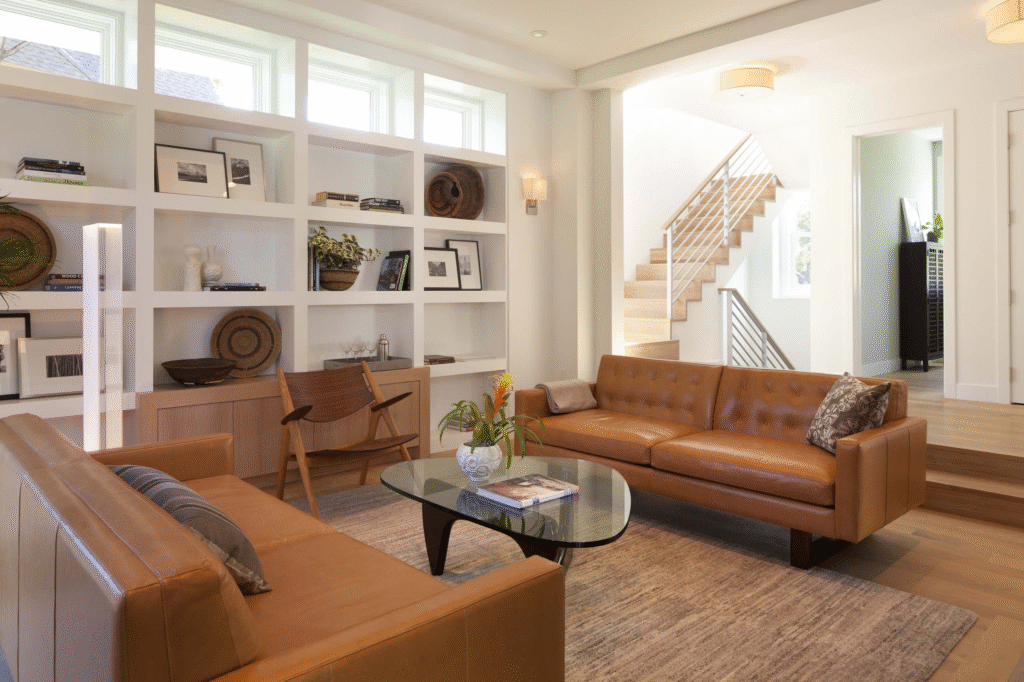
When horizontal square footage is tight, your walls have to do the heavy lifting. Guiding the eye upward tricks the brain into noticing ceiling height rather than narrow walkways.
- Hang Curtains High & Wide: Mount curtain rods right underneath the ceiling trim (rather than directly above the window frame) and let the fabric graze the floor. This visually stretches low ceilings.
- Statement Art Over Gallery Clutter: Instead of a scattered gallery wall with dozens of tiny frames, hang one bold statement canvas or a minimalist two-piece set. A large piece expands a wall; tiny frames chop it up.
- Floor-to-Ceiling Shelving: Vertical bookcases that stretch close to the ceiling maximize storage while emphasizing height.
Strategic Mirror Placement
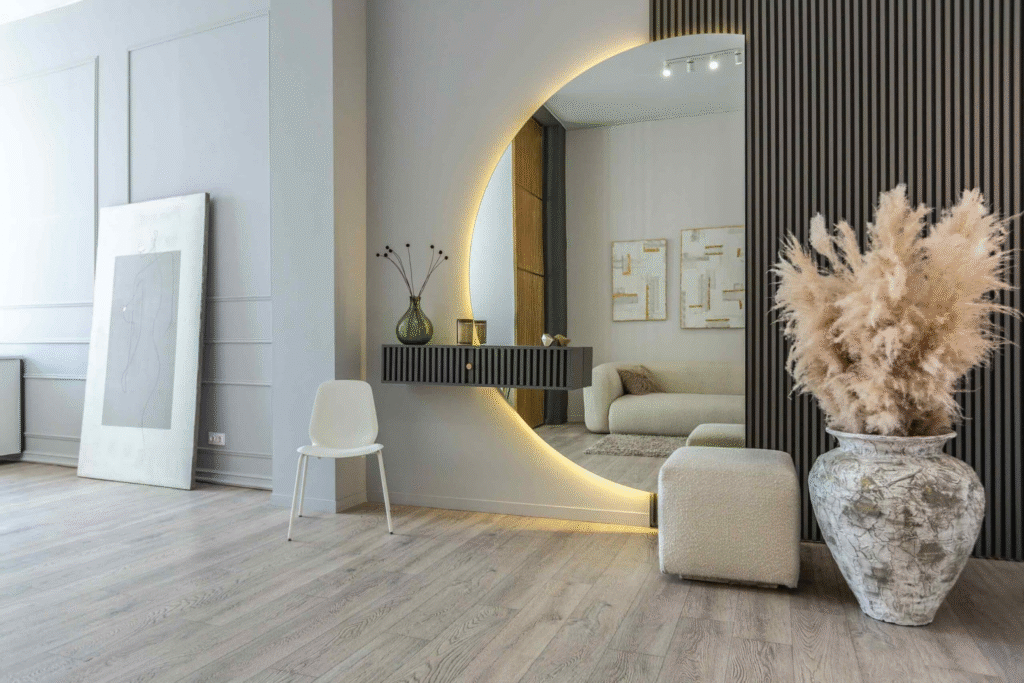
Mirrors are the classic small-space hack, but placement is everything.
Position a tall floor-leaning mirror or a wide wall mirror opposite or adjacent to a primary window. It catches natural daylight and reflects views of the outdoors, creating the optical illusion of an extra window inside your home.
Quick Swaps for an Airier Layout
| Swap This (Heavy / Busy) | For This (Light / Functional) | Why It Works |
|---|---|---|
| Solid, Boxy Coffee Table | Nesting Tables / Glass-Top | Frees up center floor space when tucked away. |
| Table Lamps on Nightstands | Wall-Mounted Sconces | Keeps 100% of your nightstand surface clear. |
| Heavy Dark Drapes | Sheer Linens / Warm Greiges | Allows natural sunlight to flood deep into the room. |
| Open Shelving Overload | Closed Slatted / Fluted Cabinets | Hides everyday clutter while maintaining texture. |
Conclusion
Decorating a small apartment without making it feel crowded is all about making thoughtful choices. Light colors, smart furniture, hidden storage, natural light, mirrors, and careful organization work together to create a home that feels larger, brighter, and more comfortable.
You don’t need a large house to enjoy beautiful interior design. By maximizing your available space and focusing on functionality, your apartment can become a stylish retreat that supports both everyday living and personal expression.
Remember that the best small apartments are not those with the most furniture or decorations—they are the ones where every element has a purpose, every room feels inviting, and every square foot is used wisely.
FAQ’S
1.How can I make my small apartment look bigger?
Use light-colored walls, mirrors, natural lighting, multi-functional furniture, and smart storage solutions while keeping clutter to a minimum.
2.What colors are best for small apartments?
White, cream, light gray, beige, and soft pastel shades help reflect light and create the illusion of a larger space.
3.What furniture works best in a small apartment?
Choose compact, multi-functional furniture such as sofa beds, storage ottomans, extendable tables, and wall-mounted desks.
4.How do I keep a small apartment organized?
Declutter regularly, use vertical storage, maximize under-bed space, install floating shelves, and keep frequently used items in hidden storage compartments.
5.Is minimalist design good for small apartments?
Yes. Minimalist design reduces clutter, improves organization, enhances visual space, and creates a clean, modern living environment that works especially well in compact apartments.