
We’ve all seen the videos. Someone turns their face toward the camera, and their cheekbones reflect light like a freshly polished mirror. The caption usually says something about Hydrated “drinking water” or a “10-step routine,” and suddenly, you’re staring at your own reflection in the bathroom mirror, wondering why your face doesn’t look like glass.
Here is the truth that the beauty industry rarely puts on a billboard: hydrated skin does not look identical on every face.
Somewhere along the line, we confused healthy skin with a specific, highly filtered aesthetic. We began chasing a permanent sheen, assuming that if our skin isn’t practically reflective, we must be doing something wrong. But real skin has texture, pores, and unique genetics. The true goal of skincare isn’t to replicate a social media trend. It is to cultivate skin that feels calm, comfortable, and deeply supported.
Hydrated The Diversity of a Healthy Glow

If you put five people with perfectly hydrated, healthy skin in the same room, their faces will all look different. Skin type, genetics, and environment dictate how your face reflects light.
The Natural Radiance vs. The Soft Matte
Some people are genetically predisposed to a dewier finish. Their skin naturally produces just enough sebum to create a built-in highlight. On the flip side, many people possess incredibly healthy, hydrated skin that naturally settles into a soft, velvety matte finish. If you have naturally oily or combination skin, your hydration might look like a plump, balanced bounce rather than a wet sheen. If you have drier skin, proper hydration might just mean your skin looks smooth and uniform, without any flaking. Both are signs of a thriving skin barrier.
Why Your Surface Texture Matters
Light reflects best off completely flat surfaces. Human faces, however, are not flat. We have pores, fine lines, tiny hairs, and unique contours. Hydration plumps up the cells, which can soften the appearance of these textures, but it doesn’t erase them. A hydrated face can still have visible pores or a dusting of freckles, and it won’t always look like a flawless piece of porcelain. Real hydration shows up as elasticity and resilience, not perfection.
The Hidden Danger of Chasing the “Wet” Look

The obsession with achieving an ultra-glossy complexion has led many people to over-process their skin. In the pursuit of that elusive glow, it is easy to fall into the trap of over-exfoliation and product overload.
[ Too Many Actives ] ---> [ Damaged Skin Barrier ] ---> [ Dehydration & Redness ]
                                                                |
[ True Hydration ]   <--- [ Simplified Routine ]   <--- [ Stop Exfoliating ]
When you apply multiple peeling serums, toners, and heavy oils every single night, you might temporarily achieve a shiny look. However, that shine often isn’t hydration at all—it’s actually light reflecting off a stripped, raw, and compromised skin barrier. When the barrier is compromised, it loses its ability to retain moisture, leading to deeper dehydration, redness, and irritation underneath the surface gloss.
True hydration isn’t something you can just paint on with a heavy face oil at the end of the night. It happens within the deeper layers of the epidermis, where water molecules are held in place by lipids and natural moisturizing factors. If your skin feels tight, itchy, or stinging, it doesn’t matter how shiny it looks on camera; it is dehydrated and needs a break from the heavy-handed routines.
How to Tell If Your Skin Is Actually Hydrated
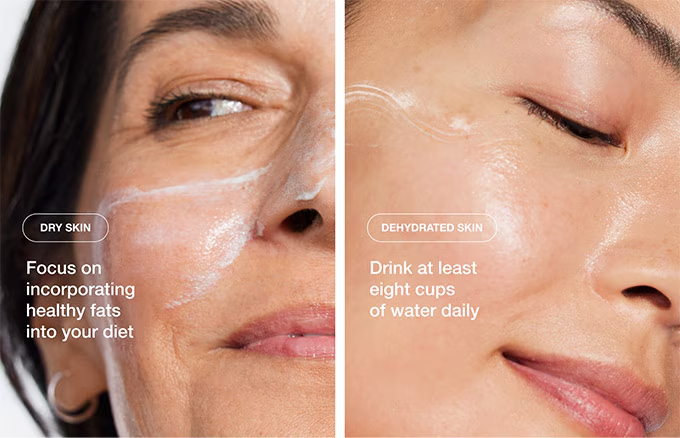
Since we can’t rely on the “glass skin” metric to judge our skin’s health, we need to look for better, more reliable signs. Hydrated skin speaks to you through how it feels and reacts throughout the day, rather than just how it looks under a ring light.
- The Bounce Test: When you gently press your finger against your cheek and let go, does your skin immediately spring back into place? Hydrated skin is full of moisture, giving it a plump, elastic quality that bounces back instantly.
- Absence of Tightness: If you wash your face with a gentle cleanser and feel an immediate, uncomfortable pulling sensation before you even reach for your moisturizer, your skin is likely dehydrated. Hydrated skin feels comfortable and flexible even right out of the shower.
- Even Product Absorption: When your skin is properly hydrated, your skincare products sit comfortably and absorb evenly. If your moisturizer pills up, or if your skin drinks it down in two seconds flat and still feels dry five minutes later, your moisture barrier needs some dedicated attention.
- A Calm Complexion: Hydrated skin is happy skin. It isn’t easily irritated by a gust of wind, a change in the weather, or a touch of fragrance. It maintains a steady, calm baseline because its protective shield is fully intact.
Building a Supportive, Hype-Free Routine
You do not need an overwhelming cupboard full of products to achieve healthy skin. In fact, keeping things straightforward is usually the best way to ensure your skin stays calm and supported. A reliable, everyday hydration routine relies on just a few core steps.

1. Cleanse Without Stripping
The biggest mistake most people make happens at the very sink. If your cleanser leaves your face feeling squeaky clean, it is removing far too much of your natural oils. Switch to a hydrating, non-foaming milk or cream cleanser, or a very gentle foaming gel that respects your skin’s natural pH.
2. Apply Hydration to Damp Skin
Humectants—like glycerin, hyaluronic acid, and beta-glucan—are ingredients that act like magnets for water. To make them work efficiently, always apply your hydrating serums or toners to slightly damp skin. This gives the ingredients immediate water to grab onto and pull into your skin cells, rather than drawing moisture out from the deeper layers of your skin.
3. Seal It All In
Hydration is about adding water, but moisturizing is about keeping that water from evaporating. Once you’ve applied your hydrating steps, lock it all in with a moisturizer that suits your specific skin type. If you have oily skin, a lightweight gel-cream will do the trick. If you have dry skin, look for a richer cream packed with ceramides and fatty acids to mimic your skin’s natural lipid barrier.
Shifting the Goal from Perfection to Comfort

It is time to change the way we talk about our skin. Your face is a living, breathing organ that protects you from the outside world every single day. It reacts to your stress, your sleep schedule, the weather, and your hormones. Expecting it to maintain a static, flawless, ultra-shiny appearance at all times is simply asking too much of it.
When you shift your focus away from trying to achieve a perfect social media image and start listening to how your skin actually feels, your entire approach to beauty changes. You stop buying every viral product on your feed and start investing in the simple things that bring your skin peace.
The real goal is skin that feels calm when you wake up, comfortable throughout the day, and thoroughly supported by a routine that honors its unique nature. Whether your healthy skin turns out to be radiant, soft, matte, or somewhere beautifully in between, it is entirely yours—and that is exactly how it should be.
Frequently Asked Questions
1.How often should I moisturize my skin?
Most people benefit from moisturizing at least once or twice a day, depending on their skin type and environment. Applying moisturizer after cleansing while the skin is still slightly damp can help lock in hydration more effectively.
2.Is drinking more water enough to keep skin hydrated?
Drinking water is important for overall health, but it is usually not enough on its own to keep skin fully hydrated. Topical skincare, gentle cleansing, and protecting the skin barrier are also necessary.
3.What ingredients should I look for in hydrating skincare products?
Ingredients such as hyaluronic acid, glycerin, ceramides, aloe, panthenol, and squalane are often helpful because they attract water, support the barrier, and help skin retain moisture.
4.Do oily skin types still need hydration?
Yes, oily skin can still be dehydrated. Oily skin may produce extra oil while still lacking enough water, so lightweight hydrating products can still be very beneficial.
5.Should I change my skincare routine in winter?
Yes, many people need richer moisturizers and more protective care in winter because cold air and indoor heating can dry the skin out faster.